The Hidden Part in Your 2.0 TDI Water Pump, and Why Cheap Replacements Leave It Out
A water pump sounds like the simplest part on an engine. It spins, it moves coolant, job done. On the 2.0 TDI used across VW, Audi, SEAT, Škoda and CUPRA, it’s more than that, and it’s one of the places where a cheaper part can quietly change how your engine behaves long after the job is signed off.
We recently had an Audi A5 2.0 TDI in for its second water pump. The first replacement had been fitted elsewhere, and it had started leaking antifreeze. When we took it off, the leak turned out to be only half the story.
How the switchable water pump works
Like any water pump, it’s driven by the timing belt and spins whenever the engine is running. The difference is inside. There’s a sliding shroud that can move over the impeller and stop it moving coolant, even though the pump is still turning.
The shroud is controlled by an electric solenoid valve on the pump, which VW calls N489, and the engine ECU decides when to switch it. The solenoid doesn’t physically push the shroud itself. When it’s energised, it closes off a small return channel, coolant pressure builds up behind a piston inside the pump, and that pressure pushes the shroud over the impeller. When the solenoid switches off, springs pull the shroud back and coolant flows as normal.
If the solenoid fails, the shroud stays open and the pump just circulates coolant like a conventional one.
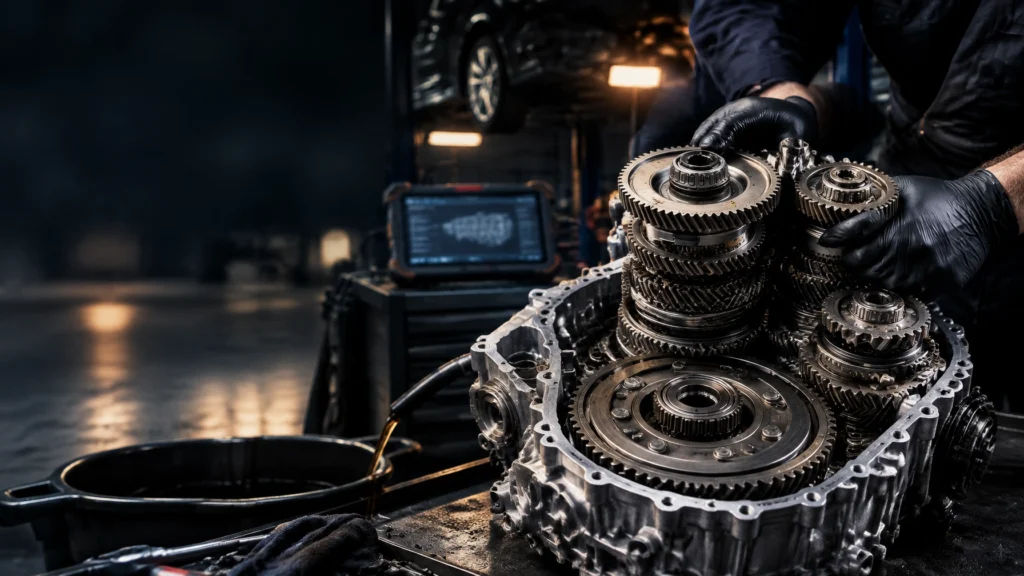
Image slot 1
Correct switchable pump, showing the shroud and the N489 solenoid.
Why it’s used
When you start a cold engine, the fastest way to warm it up is to stop moving the coolant. Circulating cold coolant around a cold engine just spreads the heat out and slows everything down.
VW call this static coolant. On a cold start, the ECU closes the shroud, the coolant around the cylinder head heats up quickly, and the engine reaches temperature sooner. Once it’s warm, or if the engine is working hard, the shroud opens and the cooling system behaves normally.
Why VW designed it
Emissions, efficiency and engine life. On a diesel, all three are connected.
A cold engine burns more fuel and produces more emissions. The oil is thicker, friction is higher and combustion is less efficient. Most engine wear happens in the first few minutes after a cold start, so shortening that window matters.
The exhaust aftertreatment needs heat too. The DPF and the rest of the emissions system only work properly at temperature, so the quicker the engine warms up, the sooner that system is doing its job. For cars doing short local runs, that’s a big deal for DPF health.
This isn’t a gimmick. The engine’s thermal management was designed around it.
What we found on the A5
The pump that had been fitted before had the solenoid on it. The wiring was plugged in. From the outside it looked like the right part.
Inside, there was no shroud.
The ECU was switching the solenoid on cold starts as designed, but there was nothing for it to control. The pump was circulating coolant constantly, from the moment the engine started. The ECU thought it was managing warm-up. It wasn’t.
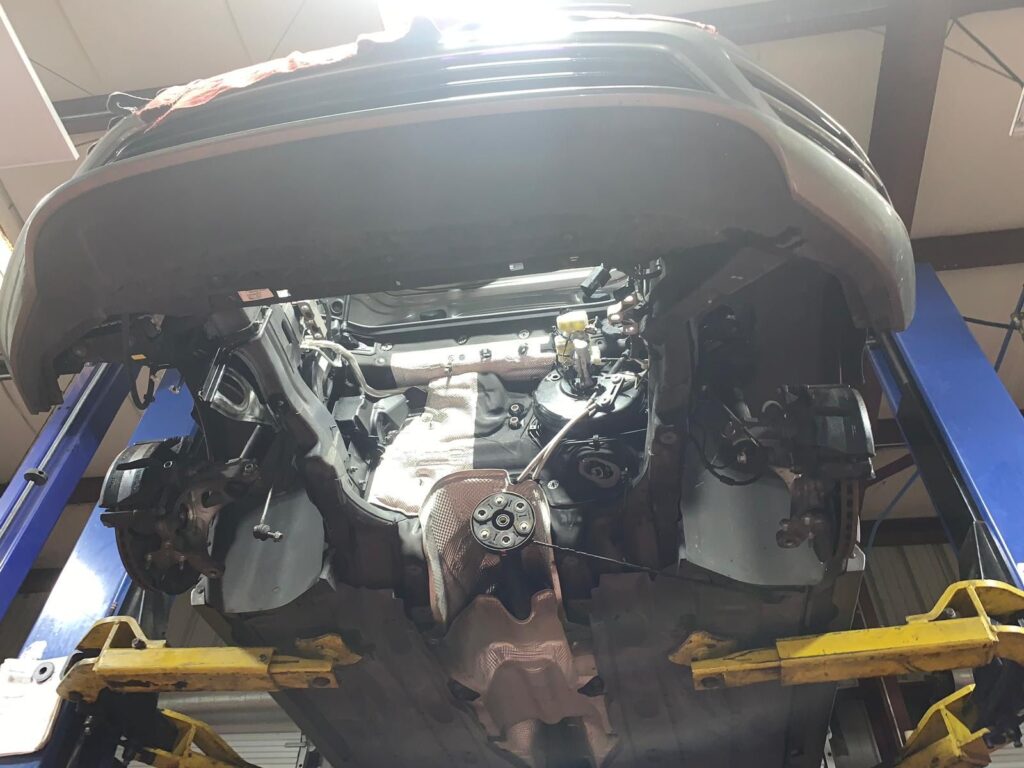
Image slot 2
The replacement pump as fitted, solenoid in place and wired in.
Image slot 3
Inside the same pump. No shroud over the impeller.
It was also leaking antifreeze.
Image slot 4
Coolant loss from the failed pump.
Why some garages fit these pumps
Mostly price. Pumps without a working shroud are cheaper and easier to get, and on these engines the water pump is normally replaced with the cambelt. That’s a job customers shop around on, so a cheaper pump makes the quote look more competitive.
To be fair, there is an argument for non-switchable pumps. Some parts manufacturers point out that if the shroud sticks closed, the engine can overheat, and they sell a pump without one to remove that risk. We understand the reasoning. But that’s a decision to change how the engine was engineered, and it should be made openly and explained to the customer. It shouldn’t happen because it was the cheaper line on the parts invoice.
Why that’s the wrong call
The engine takes longer to warm up every time it starts. More fuel, more wear on cold starts, and the emissions system spending longer below the temperature it needs. On a diesel that does short runs around Peterlee, Durham or Sunderland, that’s the kind of use that’s already hard on a DPF.
In this case, the customer also paid for the job twice. Whatever was saved on the first invoice was gone as soon as the pump started leaking.
The bigger issue is that nobody told them. A pump that looks the same from the outside, with the solenoid fitted and plugged in, but with the part that does the work missing inside. There’s no way a customer would ever know.
What a proper replacement looks like
How we handle it
When we replace the water pump on a VW Group 2.0 TDI, whether it’s a Golf, A5, Octavia or Leon, we fit a pump that matches the original specification, shroud included. We’d rather quote the job properly than win it on a part that changes how the engine behaves.
If your car has had its cambelt and water pump done elsewhere and you’re not sure what went on, it’s worth having it checked. Slow warm-up, weak heater output on cold mornings, or any coolant loss are all reasons to look.
Not sure what was fitted to your car?
We are an independent VW, Audi, SEAT, Škoda and CUPRA specialist at 16 Pease Road, Northwest Industrial Estate, Peterlee, SR8 2RD. Call 0191 586 4148 and we will tell you what we find, not what is easiest to sell.