
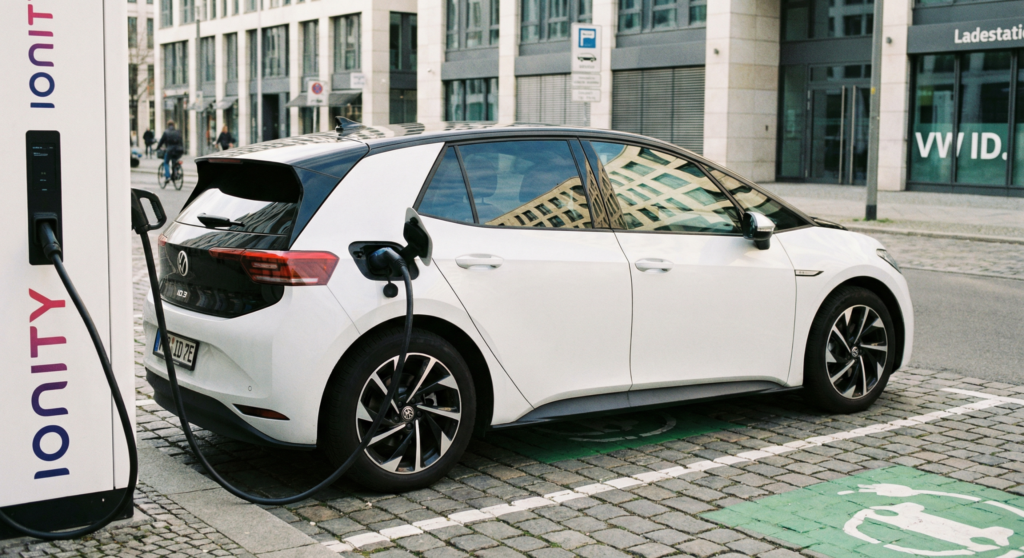
Hybrid and EV
Common Hybrid and EV Problems
Take the Next Step
Book Your Hybrid or EV In
What We Offer
Hybrid and EV Services
Why Hybrids and EVs Still Need Servicing
A plug-in hybrid has a full petrol engine and a high-voltage system under the same bonnet. The engine runs less often and for shorter spells, so it spends more of its life cold. That is hard on the oil, not easy on it.
Regenerative braking does most of the slowing down on a hybrid or EV, so the friction brakes barely get used. Discs corrode, pads stick and calipers seize. Brake fluid still absorbs water whatever the mileage, which is why we wrote about brake fluid on hybrids in its own article.
The 12-volt battery wakes up every control unit before the high-voltage system comes online. When it is weak, or the circuit monitoring it has a fault, the car can throw high-voltage warnings that have nothing to do with the high-voltage system.
The battery and power electronics also have their own cooling circuits, separate from the engine. They need checking like any other.
High-Voltage Work, Done Safely
The high-voltage systems on these cars run at several hundred volts. Before any work on a high-voltage component, the system is isolated and proven dead following the manufacturer procedure, using insulated tools and the correct protective equipment.
That work is carried out by our two Master Technicians, both qualified to IMI Level 4 in electric and hybrid vehicles. It is the qualification that covers working on live and isolated high-voltage systems, not just routine servicing around them.
Models We Work On
Plug-in hybrids
Volkswagen Golf GTE, Passat GTE, Tiguan eHybrid and Touareg eHybrid. Audi A3 TFSI e, Q3 TFSI e, A6 TFSI e, Q5 TFSI e and Q7 TFSI e. Škoda Octavia iV and Superb iV. CUPRA Formentor and Leon e-Hybrid. SEAT Leon e-Hybrid.
Mild hybrids
The 48-volt eTSI engines in the Golf, Octavia, Leon and others. These need standard servicing with an eye on the 48-volt battery and belt starter generator.
Electric
Volkswagen ID.3, ID.4, ID.5, ID.7 and ID. Buzz. Audi Q4 e-tron and e-tron. Škoda Enyaq. CUPRA Born.
A Real Example
An Audi A3 40 TFSI e came in unable to charge. The cable would not lock into the socket, the car was running on petrol for every journey, and the scan showed a string of DC-DC converter faults alongside others pointing at expensive hybrid components.
On paper, a big bill. The actual cause was a broken wire in the boot, on the circuit that monitors the 12-volt battery. We repaired it and the car charges again. The full write-up is here: Audi A3 40 TFSI e not charging.
That is the difference between reading codes and diagnosing a high-voltage car. See our diagnostics page for how we approach fault finding.
What It Costs
Plug-in hybrid service, from £[CONFIRM]
Engine service to specification plus high-voltage system and cooling checks.
EV service, from £[CONFIRM]
Brakes, brake fluid, filters, coolant, tyres, suspension and high-voltage system checks to the manufacturer schedule.
Diagnostics, £100 per hour
Most faults are identified inside the first hour. The diagnostic charge is separate and is not credited against any repair that follows.
Repairs
Quoted in writing after diagnosis. Nothing goes ahead without your say-so.
Your Warranty Stays Intact
Having your hybrid or EV serviced by an independent specialist does not invalidate your manufacturer warranty, including the separate high-voltage battery warranty. Under Block Exemption Regulation you can use any garage, provided the work follows the manufacturer schedule and uses parts of matching quality. We do both, and record the service to your digital service history.
Hybrid and EV: Common Questions
Do electric cars need servicing?
Yes. There is no engine oil to change, but brakes, brake fluid, coolant, filters, tyres, suspension, the 12-volt battery and the high-voltage system all need checking to the manufacturer schedule. Skipping it can also cause problems with warranty claims.
Can an independent garage service my hybrid or EV without affecting the warranty?
Yes. Block Exemption Regulation allows it, provided the work follows the manufacturer schedule and uses parts of matching quality. That includes the high-voltage battery warranty.
Are you qualified to work on high-voltage systems?
Yes. Both our Master Technicians hold IMI Level 4 in electric and hybrid vehicles, which covers working on high-voltage systems, not just around them.
Why will my plug-in hybrid not charge?
Common causes include a charge port lock fault, a fault on the 12-volt system, or a problem with the on-board charger or DC-DC converter. The fault codes do not always point at the real cause, which is why it needs diagnosing properly rather than fitting parts.
Do you work on Volkswagen ID models, Škoda Enyaq and CUPRA Born?
Yes. We service, diagnose and repair the full Volkswagen Group EV range, including ID models, the Enyaq, the Born and Audi e-tron.
Why do the brakes on my hybrid keep sticking?
Regenerative braking does most of the work, so the discs and pads are used far less than on a conventional car. They corrode and calipers can seize. Regular brake inspections and fluid changes keep on top of it.
Where to Find Us
High Volt Garage
16 Pease Road, Northwest Industrial Estate, Peterlee, County Durham, SR8 2RD
0191 586 4148
Monday to Thursday, 08:30 to 18:30
We are a VAG specialist workshop on the Northwest Industrial Estate in Peterlee, with two IMI Master Technicians and dealer-level diagnostic equipment.
Customers travel to us from across County Durham, Tyne and Wear and Teesside, including Easington, Horden, Blackhall, Seaham, Murton, Wingate, Trimdon, Shotton Colliery, Durham City, Hartlepool, Sunderland, Houghton-le-Spring, Chester-le-Street, Washington, Stockton-on-Tees and Billingham.
Call: 01915864148