5 Million and Counting: What VW's Massive Electric Milestone Means for Peterlee Drivers
Volkswagen Group just announced they’ve built their five millionth electric drive unit. That’s not five million electric cars: it’s five million electric motors, power units, and all the clever bits that actually make an EV move. It’s a massive number, and it tells you something important: electrification isn’t coming. It’s already here.
For those of us working on VW-Audi Group vehicles in the North East, this milestone matters. Not because it’s a nice headline, but because it changes what’s rolling into independent workshops like ours in Peterlee. Five years ago, seeing an ID.3 or an e-tron was rare. Now? We’re seeing them weekly. Hybrid GTEs, plug-in Passats, all-electric Cupras: they’re normal traffic.
And that means the tooling, training, and diagnostic capability to work on them properly needs to be normal too.
What Actually Is an Electric Drive Unit?

Let’s start with the basics. An electric drive unit isn’t just a motor bolted to a gearbox. It’s an integrated package that combines three key components: the electric motor itself, the reduction gearbox (usually single-speed), and the power electronics that manage how energy flows from the battery to the wheels.
On a traditional combustion engine, you’ve got hundreds of moving parts: pistons, valves, timing chains, turbos. An electric drive unit has far fewer. The motor spins, the gearbox reduces that speed to something useable at the wheels, and the inverter converts DC battery power into AC to drive the motor. It’s simpler mechanically, but far more complex electronically.
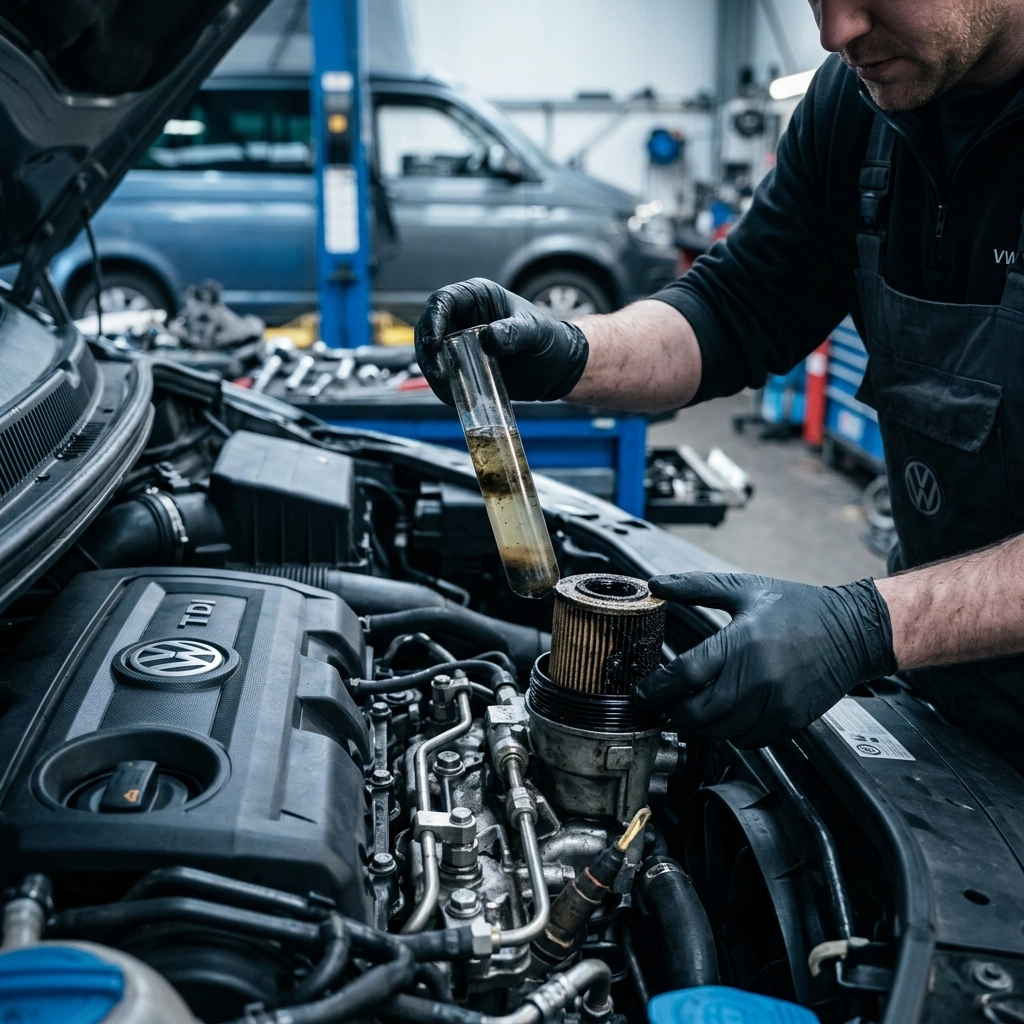
That’s why you can’t treat them like a diesel that needs an oil change and a visual once-over. The diagnostics are different. The safety procedures are different. And if something does go wrong, the fault codes and repair processes are entirely manufacturer-specific.
Five Million Units: What Does That Actually Mean?
Volkswagen Group isn’t just VW. It’s Audi, SEAT, CUPRA, Škoda, Porsche. When they say five million drive units, they mean across all brands and all platforms. The most common unit they’ve built is called the APP550: that’s the one you’ll find in the ID.3, ID.4, ID.5, and the newer ID.7. Over a million of those alone have been produced.
What’s significant isn’t just the volume. It’s the refinement. The latest APP550 is 20% more efficient than the original version, which means better real-world range without adding battery weight. They’ve improved the torque delivery, reduced noise, and made the units more reliable under sustained motorway use: which, let’s be honest, is where early EVs sometimes struggled.
For drivers in County Durham and the wider North East, that translates into something practical: if you’re considering an ID.4 or thinking about moving from a Golf GTI to a Golf GTE, the electric side of these cars is now proven at scale. They’re not experimental. They’re production-line mature.
The Models You’re Actually Seeing on the Road

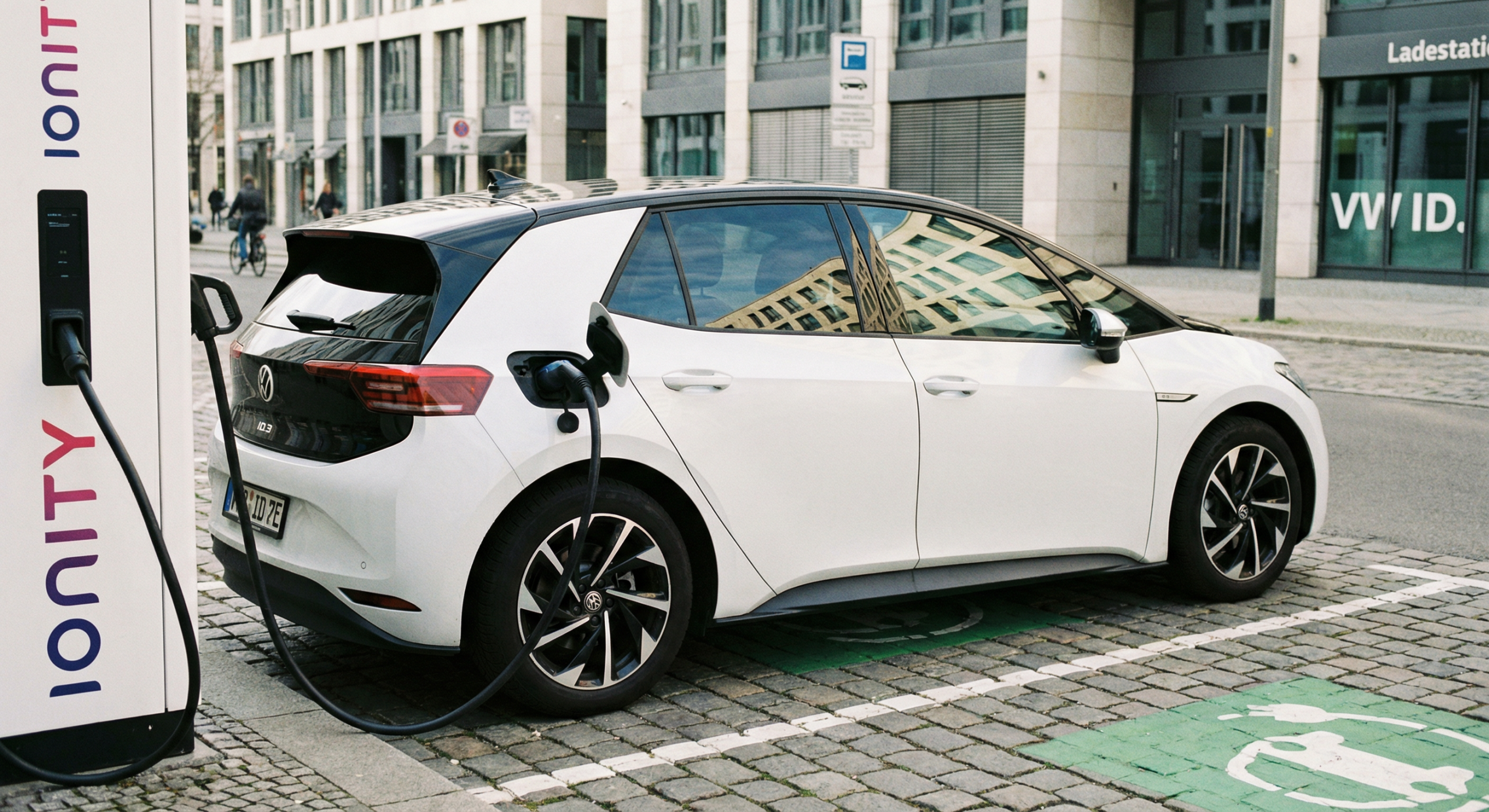
Walk around any Tesco car park in Peterlee or Hartlepool and you’ll spot them. The VW ID.3 is probably the most common: it’s the electric Golf replacement, whether Volkswagen officially calls it that or not. Compact, practical, and increasingly affordable on the used market.
Then there’s the ID.4, which is the electric Tiguan equivalent. Bigger, more family-oriented, and genuinely popular with people who’ve made the switch from diesel SUVs. The Audi Q4 e-tron shares the same platform and drive units, just with fancier trim and a different badge.
On the hybrid side, the Golf GTE, Passat GTE, and Tiguan eHybrid are all over the North East now. These use smaller electric motors combined with a petrol engine, but they still rely on high-voltage systems and need the same diagnostic access as a full EV when something goes wrong.
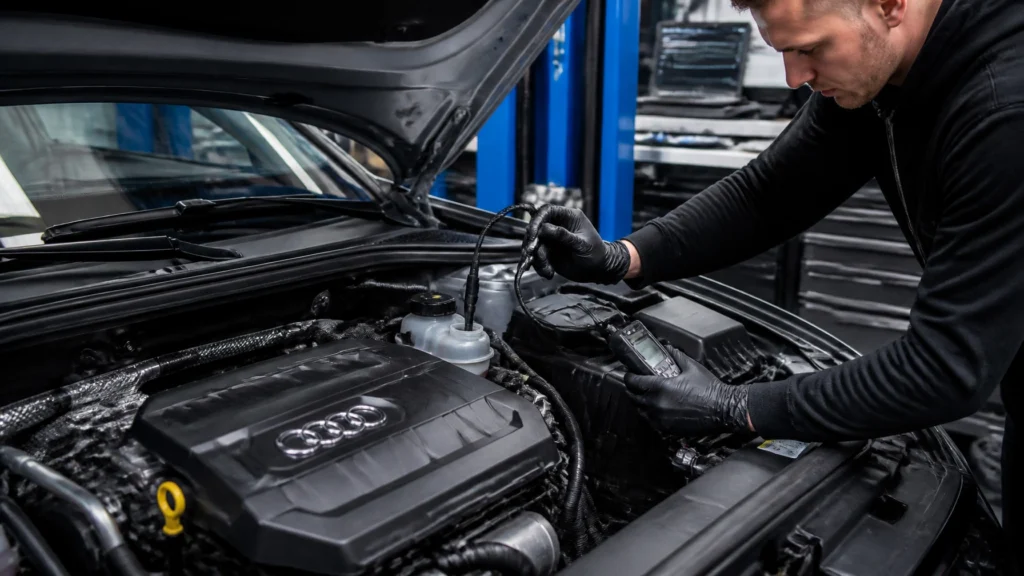
And that’s the thing: when these cars have an issue, it’s rarely a case of “whack a code reader on it and swap a sensor.” You need proper ODIS diagnostics, the correct software updates, and someone who understands how the high-voltage safety systems interact with everything else.
What This Means for Independent Specialists
Here’s where it gets interesting for anyone running a modern VW Group vehicle in the area. As EVs and hybrids become mainstream, the idea that you have to go back to a main dealer for anything electrical is outdated. But: and this is important: you do need a specialist who’s invested in the right equipment.
At High Volt Garage, we’ve made that investment deliberately. We’re not trying to be a general garage that “does a bit of everything.” We’re a VAG specialist, and as the group has gone heavy into electrification, we’ve followed. That means high-voltage safety-certified tools, genuine Volkswagen ODIS diagnostics, and the proper isolation and testing equipment to work on hybrid and EV powertrains safely.

When you bring an ID.3 or a GTE to us, we’re accessing the same diagnostic systems the dealer uses. We’re reading the same fault codes, running the same software checks, and following the same safety protocols. The difference? We’re doing it at independent garage pricing, not franchise labour rates.
Why Electrification Changes the Diagnostic Game
One of the biggest misconceptions about electric and hybrid cars is that they’re “low maintenance” in a way that makes them immune to problems. They are lower maintenance: no oil changes, no cambelt replacements, fewer consumables: but when something does go wrong, it’s almost always electronic.
That might be a failing battery cell, a software glitch in the charging system, a faulty gate driver in the inverter, or a sensor reporting incorrect temperatures. You won’t see these with a basic code reader. You need access to the vehicle’s internal networks, and you need to know how to interpret what you’re seeing.
For example, if an ID.4 throws a drivetrain fault and goes into limp mode, the issue could be a genuine hardware failure: or it could be a software conflict after an incomplete over-the-air update. Without ODIS access, you’re guessing. With it, you’re reading the exact module versions, checking for known issues, and either clearing a software flag or identifying a component that genuinely needs replacing.
This is why, as the five million milestone shows, the manufacturers are serious about electric. And if they’re serious, the aftermarket needs to be equally serious about keeping up.
The Cost Reality: Dealer vs Specialist
Let’s talk money. A main dealer service on an ID.3 or an Audi e-tron isn’t cheap. You’re paying for the franchise overhead, the showroom, the free coffee. You’re also paying labour rates that can be £120+ per hour in some areas.
An independent VAG specialist in Peterlee charges less: not because we’re cutting corners, but because our overheads are lower and we’re not tied to manufacturer profit targets. When we service a hybrid or EV, we’re using the same diagnostic software, the same technical procedures, and in many cases the same genuine parts. The work is identical. The bill isn’t.
And here’s the bit that surprises people: your digital service record stays intact. When we use ODIS to log a service or repair, it goes straight into the Volkswagen Group system. Your car’s history is maintained exactly as it would be at a dealer. You’re not sacrificing anything except the inflated labour rate.
What Comes Next for EV Drivers in the North East

Volkswagen has already announced that new models coming in 2026 will use an updated drive unit: the APP290: with silicon carbide inverters for better efficiency and lower cost. They’re also targeting sub-£25,000 electric city cars for the European market, which means the entry price for a new VW EV is coming down fast.
For the used market, that’s good news. It means more choice, better availability, and realistic pricing on capable electric cars that actually work for UK driving conditions: which, let’s be honest, means motorway range in January when it’s freezing and you’ve got the heater on full.
As those cars filter through onto the used market in Sunderland, Durham, and across County Durham, they’ll need servicing. They’ll need diagnostics. And they’ll need workshops that understand them.
That’s what we’ve built High Volt Garage to do. Not as a side project or an add-on service, but as the main focus. We’re a Hybrid & EV Specialist for VW-Audi Group vehicles, and as those five million drive units find their way onto UK roads, we’re here to keep them running.
If you’re driving an ID model, a GTE, or anything with a plug and a high-voltage badge, you don’t need a dealer. You just need someone who knows what they’re doing. And increasingly, that’s us.